
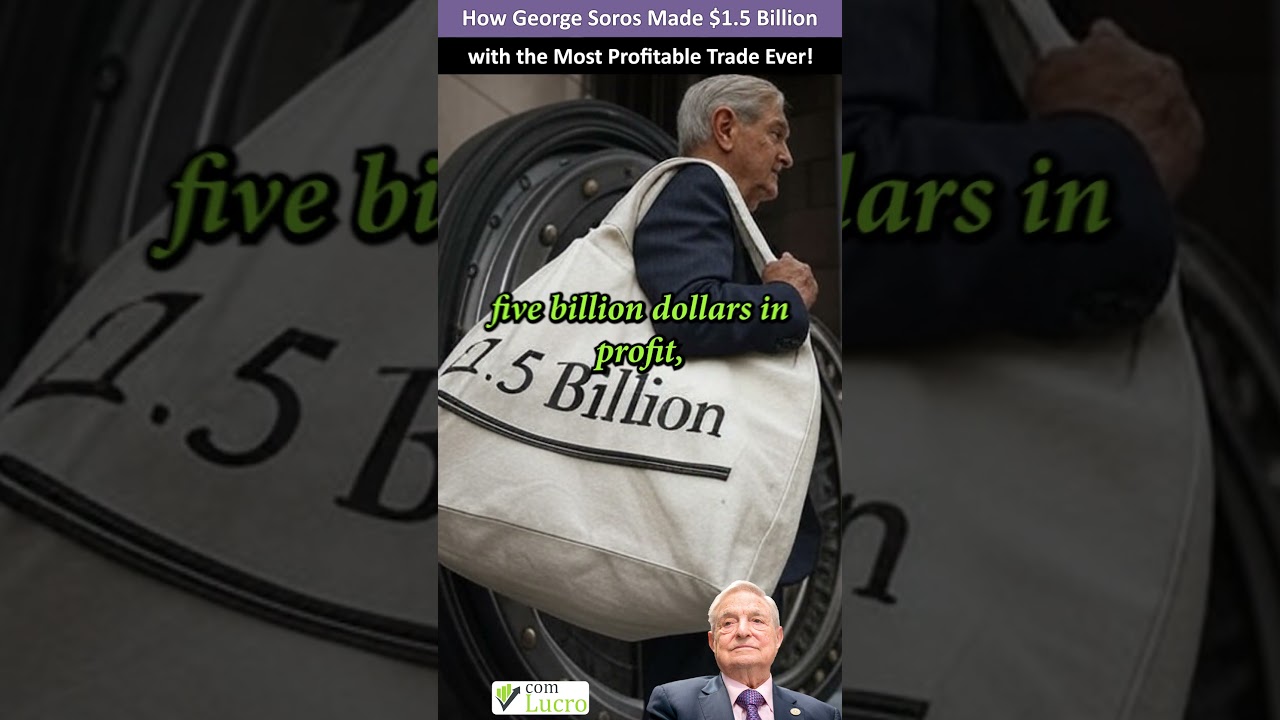
How George Soros Made $1.5 Billion: The Ultimate Trading Lesson
Unlocking the Secrets of George Soros’ Billion-Dollar Trade
George Soros’s legendary bet against the British pound in 1992 remains one of the most profitable trades in history. Earning him a staggering $1.5 billion, this move wasn’t just luck; it was a calculated play based on deep macroeconomic analysis and a keen understanding of market vulnerabilities. This article delves into the core of Soros’s strategy, revealing the critical elements that allowed him to capitalize on the Bank of England’s unsustainable position.
The Context: ERM and the Unsustainable Pound
In the early 1990s, the UK was part of the European Exchange Rate Mechanism (ERM), a system designed to stabilize exchange rates among European currencies. The Bank of England was committed to maintaining the pound’s value within a specified range. However, high interest rates, economic struggles, and a lack of competitiveness made this commitment increasingly difficult. This created a fundamental imbalance that Soros recognized and exploited.
Soros’s Masterstroke: Shorting the Pound
Soros, through his Quantum Fund, took a massive short position against the pound. This meant he was betting that the pound’s value would fall. His conviction was based on the belief that the Bank of England couldn’t sustain the artificially high exchange rate. He anticipated that the economic pressures would eventually force the UK to devalue its currency or exit the ERM altogether.
The Technical Twist: Identifying the Weakness
The beauty of Soros’s trade wasn’t just the massive scale; it was the precision of his timing and understanding of the economic landscape. He identified the Bank of England’s commitment to the ERM as a critical weakness. Their attempts to defend the pound through interventions like raising interest rates proved unsustainable in the face of overwhelming market pressure. The UK’s economic struggles and high interest rates created an environment where it was impossible to compete with Soros’ massive short positions.
Black Wednesday: The Day the Pound Collapsed
On September 16, 1992, known as Black Wednesday, Soros’s bet paid off spectacularly. The Bank of England was forced to withdraw from the ERM, and the pound plummeted. Soros walked away with a $1.5 billion profit, while the Bank of England reportedly lost $3.3 billion in its futile attempt to defend the currency. The pound lost 9% of its value.
Key Takeaways for Traders and Investors
- Fundamental Analysis is Key: Soros’s trade wasn’t based on speculation; it was rooted in a deep understanding of economic fundamentals and imbalances.
- Timing is Everything: Recognizing the unsustainable nature of the pound’s exchange rate was crucial, but so was the timing of his bet. He waited for the right moment to strike.
- Exploit Weaknesses: Soros identified and exploited a critical weakness in the Bank of England’s position.
- Consider the Bigger Picture: Macroeconomic insights are essential for successful trading and investing.
Applying the Lessons Today
While the specific circumstances of 1992 may not be replicable, the underlying principles of Soros’s trade remain relevant. Traders and investors can learn from his approach by focusing on fundamental analysis, identifying market imbalances, and understanding the macroeconomic forces at play. By analyzing the bigger picture and combining it with technical precision, one can increase their odds of success in the markets.
The Power of Macroeconomic Insights
Soros’s success highlights the importance of macroeconomic insights in trading. Understanding the economic climate, interest rates, inflation, and other factors can provide valuable context for making informed investment decisions. It allows you to identify trends and anticipate potential market movements.
Ready to Master the Art of Strategic Trading?
Want to learn even more about how George Soros executed this incredible trade and how you can apply his principles to your own trading strategies? Watch the full video now! You’ll gain a deeper understanding of the economic factors at play, the technical analysis involved, and the lasting lessons that can help you become a more successful trader. Don’t miss out on this opportunity to learn from one of the greatest traders of all time!
